

The 10 best weekend trips from Rio de Janeiro, Brazil
- Apr 24
- 7 min read
Rio de Janeiro itself a city full of things to do. Nevertheless, if you live in Rio or are visiting for a longer trip, you may start itching for a weekend getaway. Like Rio itself, the surrounding area has countless opportunities for adventure, from mountain ranges to beaches, to delightful historic towns.
Along the coast, areas like Região dos Lagos and Ilha Grande are perfect for boat trips, snorkelling, and beach hopping. Inland, mountain regions such as Visconde de Mauá and Nova Friburgo are perfect for this craving rivers, waterfalls, and walking trails. There are also towns like Paraty and Petrópolis where you can combine historic sites with some time outdoors.
Top 10 trips from Rio de Janeiro to do this weekend
These are my personal top 10 weekend trips from Rio de Janeiro.
1. Itatiaia National Park and Penedo

Distance from Rio de Janeiro: ~170 to 200 km
Travel time: ~2.5 to 3 hours
Itatiaia National Park is Brazil’s first national park, created in 1937, and is divided into two main areas with different landscapes. The lower section has forest trails, rivers, and waterfalls such as Véu da Noiva, where you can walk short distances and swim in natural pools. The upper section is higher in altitude and more exposed, with rocky terrain and peaks like Agulhas Negras, one of the highest points in the state, which requires guided climbing or hiking depending on the route. A short drive away, Penedo provides a base with restaurants, small shops, and accommodation, along with easy access to additional waterfalls such as Cachoeira de Deus and Três Bacias.
2. Petrópolis
Distance from Rio de Janeiro: ~70 km
Travel time: ~1 to 1.5 hours
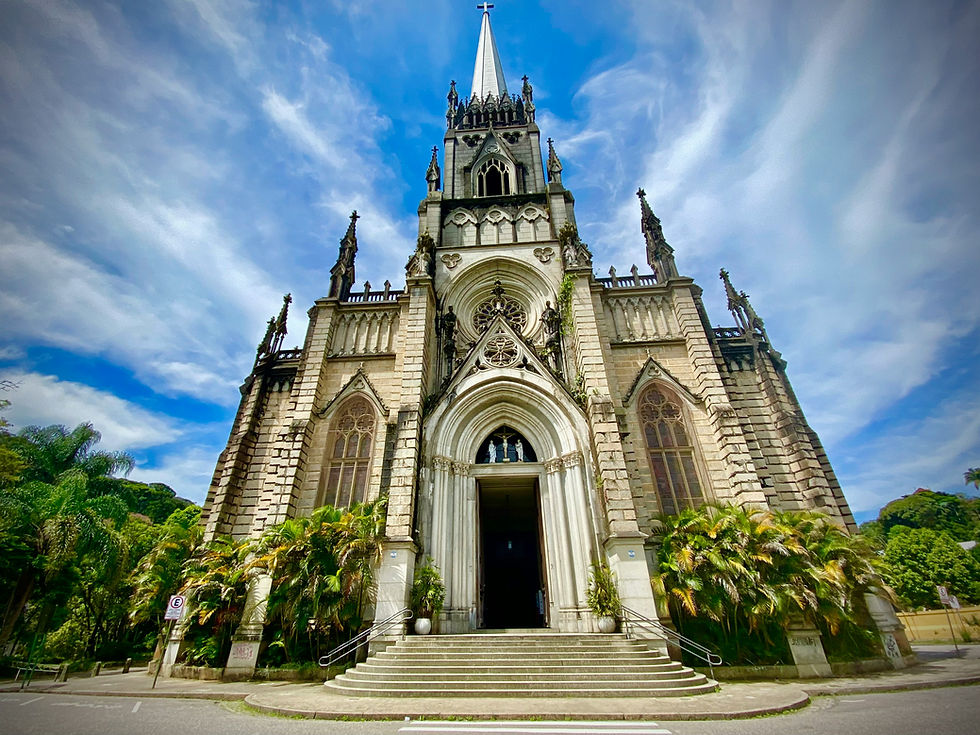
Petrópolis is a mountain city developed as the summer residence of the Brazilian imperial family, and many of its main sites are linked to that period. The Imperial Museum, housed in the former palace of Dom Pedro II, displays furniture, documents, and the imperial crown within landscaped grounds. Nearby, the Cathedral of Saint Peter of Alcantara contains the tombs of the imperial family, and the Quitandinha Palace is a large historic building originally constructed as a casino hotel. Over a weekend, you can also visit Casa de Santos Dumont, the former residence of the aviation pioneer, and explore parts of Serra dos Órgãos National Park nearby for short hikes.
3. Região dos Lagos (Arraial do Cabo, Cabo Frio, Búzios)
Distance from Rio de Janeiro: ~160 to 190 km
Travel time: ~2.5 to 3.5 hours
The Região dos Lagos is a coastal area is known for its clear turqoise water, sand dune, and a diversity of beaches with different conditions. In Arraial do Cabo, the focus is on boat trips that stop at beaches like Praia do Farol and Prainhas do Pontal do Atalaia, where water visibility is high and suitable for snorkelling. Cabo Frio has long, accessible beaches such as Praia do Forte, backed by dunes and stronger wind. In Armação dos Búzios, you'll find multiple smaller beaches like João Fernandes and Geribá. Buzios is the more popular choice for those looking for lively nightlife and restaurants.
4. Itatiaia National Park and Penedo
Distance from Rio de Janeiro: ~170 to 200 km
Travel time: ~2.5 to 3 hours
Itatiaia National Park is Brazil’s first national park, created in 1937, and is divided into two main areas with different landscapes. The lower section has forest trails, rivers, and waterfalls such as Véu da Noiva, where you can walk short distances and swim in natural pools. The upper section is higher in altitude and more exposed, with rocky terrain and peaks like Agulhas Negras, one of the highest points in the state, which requires guided climbing or hiking depending on the route. A short drive away, Penedo provides a base with restaurants, small shops, and accommodation, along with easy access to additional waterfalls such as Cachoeira de Deus and Três Bacias.
5. Conservatória
Distance from Rio de Janeiro: ~140 km
Travel time: ~2.5 to 3 hours
Conservatória is a small inland town known for its association with Brazilian serenade music. The main activity is walking through the town centre, where houses display plaques with song lyrics and historical references to composers and performers. In the evenings, organised serenades take place, with musicians moving through the streets and stopping at specific locations to perform. During the day, you can visit small museums such as the Museu da Seresta, which documents the history of this musical tradition, or explore nearby farms and rural areas. The town has a compact layout with guesthouses, restaurants, and cafés concentrated around the centre. A weekend visit allows time to experience both the daytime setting and the evening performances, which are the main draw.
6. Vassouras (Vale do Café)

Distance from Rio de Janeiro: ~120 km
Travel time: ~2 to 2.5 hours
Vassouras is part of the Vale do Café, a region that was central to Brazil’s coffee production in the 19th century. The main activity is visiting preserved estates, known as fazendas, where you can tour original buildings, see period furniture, and learn how coffee was produced and transported during the imperial era. Some estates offer guided visits that include demonstrations and meals based on traditional recipes. In the town centre, Praça Barão de Campo Belo and surrounding streets include colonial buildings, small museums, and churches linked to the same period. The landscape around Vassouras is made up of rolling hills and former plantation land, which can be seen while moving between estates.
7. Ilha Grande

Distance from Rio de Janeiro: ~150 km to Angra + boat transfer
Travel time: ~2.5 to 3 hours drive + 30 to 90 minutes by boat
Ilha Grande is a car free island covered by Atlantic Forest, where movement is by foot or boat between beaches. Most visitors stay in Vila do Abraão, which acts as a base for boat trips and trail access. You can hike to beaches such as Lopes Mendes, known for its long stretch of sand and strong surf, or follow shorter trails to nearby spots like Praia Preta and Cachoeira da Feiticeira, which combines a waterfall with a swimming area. Boat tours circle the island, stopping at multiple beaches and snorkelling points with clear water. Alternatively, stay in Angra dos Reis, where tour operators run island hopping trips through the surrounding bay, which contains over 300 islands.
8. Nova Friburgo

Distance from Rio de Janeiro: ~140 km
Travel time: ~2.5 to 3 hours
Nova Friburgo is set in the Serra do Mar and provides access to mountain terrain, forest trails, and elevated viewpoints. One of the main areas to explore is Parque Estadual dos Três Picos, the largest state park in Rio, where you can hike to viewpoints, walk forest trails, and access peaks such as Pico da Caledônia, which has a staircase route leading to panoramic views over the region. Within and around the town, there are rivers and waterfalls, swimming spots, as well as rural farms and local food producers. The town itself has a small centre with markets and restaurants.
Camping is well established in the region, especially around areas like Lumiar, São Pedro da Serra, and near Parque Estadual dos Três Picos. There are multiple designated campgrounds with basic infrastructure. Low light pollution makes it a perfect spot to look at the night sky.
9. Visconde de Mauá
Distance from Rio de Janeiro: ~280 km
Travel time: ~5 to 6 hours
Visconde de Mauá is a mountain region near the border with Minas Gerais, made up of small villages such as Maringá and Maromba, with activities centred around rivers and waterfalls. The area sits within the Serra da Mantiqueira and includes parts of Itatiaia National Park, Brazil’s first national park. You can follow short trails to waterfalls like Cachoeira do Escorrega, where smooth rock forms a natural slide into a pool, or walk between multiple falls along the Rio Preto. Many sections of river are accessible directly from the roadside, making it easy to move between swimming spots. The villages have a small number of restaurants and shops.
10. Paraty and Trindade

Distance from Rio de Janeiro: ~250 km
Travel time: ~4 to 5 hours
Paraty is a preserved colonial town where the historic centre is built with stone streets and whitewashed buildings dating back to the 17th and 18th centuries. The main activity is exploring the town on foot, visiting churches, small museums, and restaurants set within the old streets. From the waterfront, schooner and speedboat trips run daily, stopping at islands and beaches in the bay where you can swim and snorkel in clear water. A short drive south leads to Trindade, a smaller coastal area with beaches and trails. Here you can walk between Praia do Meio, Praia do Cachadaço, and the natural pool known as Piscina Natural do Cachadaço, which is formed by rocks and accessed via a short trail. Inland from Paraty, there are also waterfalls and cachaça distilleries that offer tours and tastings.
Serra da Bocaina National Park
Distance from Rio de Janeiro: ~220 to 270 km (access varies)
Travel time: ~4 to 5 hours
Serra da Bocaina National Park is a large protected area covering mountains, forest, and sections of historic routes between the coast and inland regions. The park includes parts of the old Gold Trail (Caminho do Ouro), a route used during the colonial period to transport goods between Paraty and inland areas. You can hike sections of this trail through forest, crossing stone paths, rivers, and historic infrastructure. The park is also known for waterfalls such as Cachoeira de Santo Izidro, which has a high drop and designated swimming areas below. Access points are spread out and often reached via dirt roads, with some areas requiring a guide or local transport. Over a weekend, the focus is on longer hikes, visiting waterfalls, and moving through less developed parts of the Atlantic Forest rather than staying in a single town.
Visconde de Mauá
Distance from Rio de Janeiro: ~280 km
Travel time: ~5 to 6 hours
Visconde de Mauá is a mountain region near the border with Minas Gerais, made up of small villages such as Maringá and Maromba. The area sits within the Serra da Mantiqueira and includes parts of Itatiaia National Park, Brazil’s first national park. You can follow short trails to waterfalls like Cachoeira do Escorrega, where smooth rock forms a natural slide into a pool, or walk between multiple falls along the Rio Preto. Many sections of river are accessible directly from the roadside, making it easy to move between swimming spots. The villages have a small number of restaurants and shops, and are connected by short drives or walking paths.













Comments